Research
My research explores how states manage the presence of noncitizens whose arrival challenges existing boundaries of national membership. I focus on South Korea’s refugee governance system, examining how administrative and legal institutions produce exclusion through what I call “bureaucratic violence” — a process that operates not through dramatic and overt acts of enforcement, but through quiet and routine administrative procedures that gradually erode the possibility of belonging. Across my work, I am interested in the gap between formal legal commitments to protection and the institutional practices that undermine them on the ground.
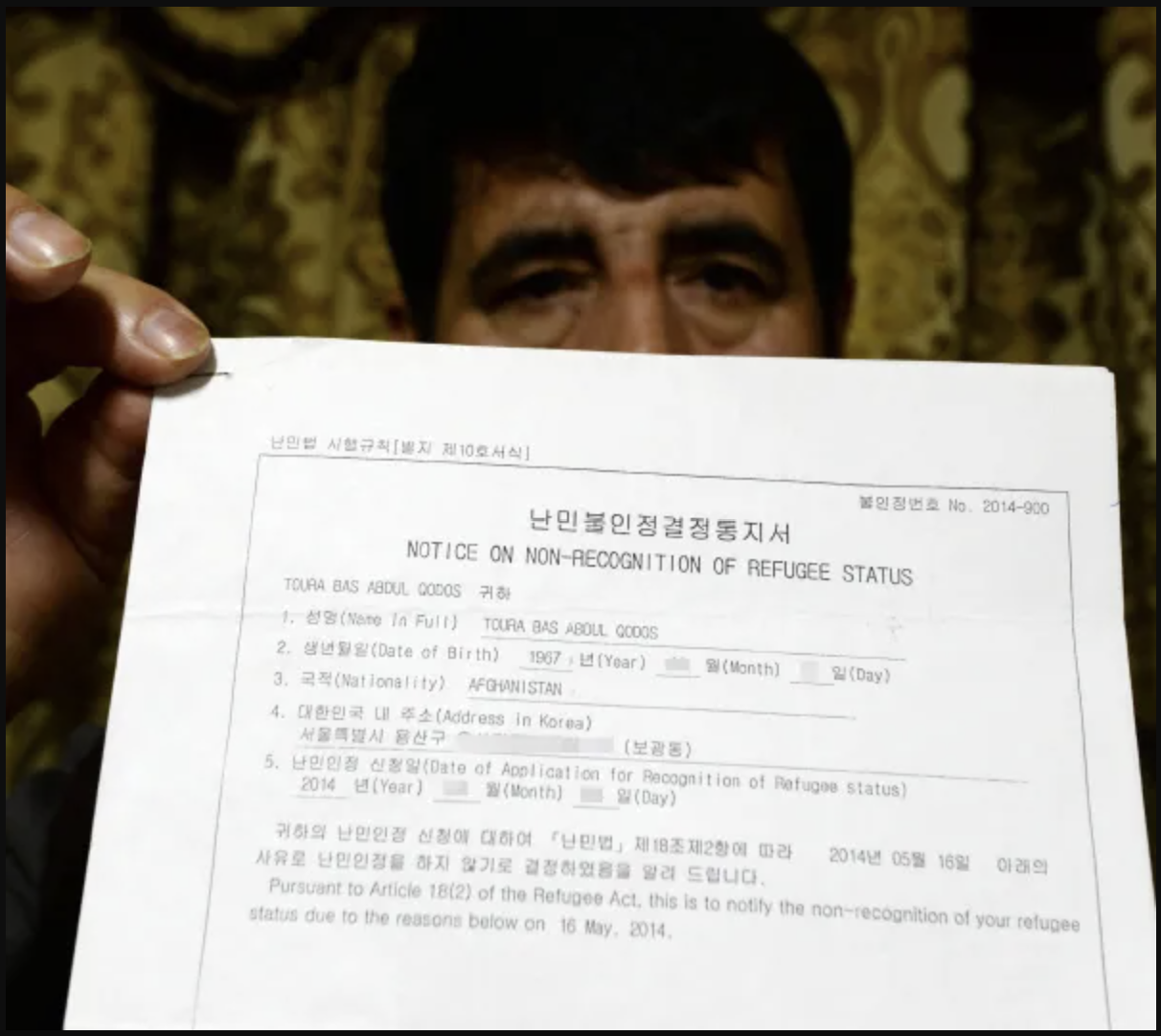
An Afghan man holds up a notice of the South Korean government’s decision denying refugee status (Photo by Kang Yoon-joong / Kyunghyang Shinmun)
Peer-Reviewed Articles
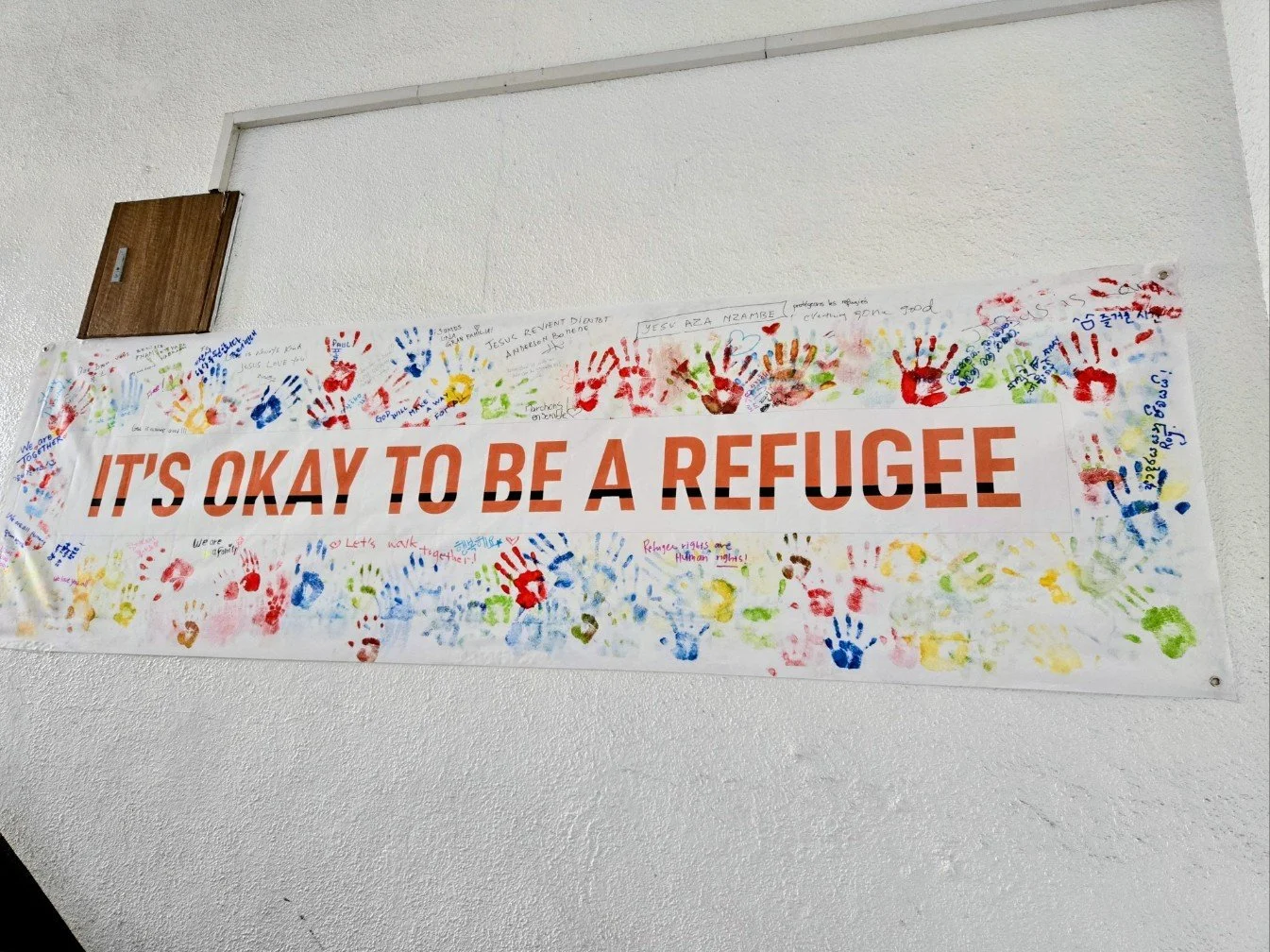
At Refuge pNan
Photo by Angela Y. McClean
2026. "Targetability as Credibility: The Judiciary and
Refugee Status Determination in South Korea." International
Migration Review. OnlineFirst.
This article examines how courts determine the credibility of asylum-seekers, focusing on the role of “targetability” — the perceived likelihood that an applicant would attract persecution if refouled. Drawing on a comprehensive dataset of South Korean refugee cases, it shows that judges privilege applicants who are highly active, publicly visible, and able to provide verifiable evidence of past persecution, which significantly narrows down the institutional definition of who qualifies as a refugee under the law.
2024. "Preserving Law and Order: How Institutions Implementing International Norms on Refugee Protection Can Restrict Asylum Outcomes."International Political Sociology 18(1): 1-21.
Winner of MORI-ASPAC Award given to an "extraordinary graduate student scholarship in any area of Asian Studies" by the Asian Studies on the Pacific Coast
Selected as Association for Asian Studies’ best graduate student paper (one of five)
This article examines why refugee recognition rates vary widely across countries despite strong international legal frameworks. Focusing on South Korea, it shows that the institutional ethos of government agencies responsible for refugee status determination, which in this case is rooted firmly in law-and-order priorities, can conflict with human protection principles, producing systematically low recognition rates.
2020. "Universalising the particular: strategic framing in immigrant cross-border activism." Journal of Ethnic and Migration Studies. 46(7): 1478-1496.
This article investigates how migrant activists frame transnational political causes to reach broader audiences beyond their co-ethnic communities. Focusing on the Korean American “comfort women” movement, it shows that activists strategically adopt universalistic appeals — rather than ethnic or national ties — to resonate with mainstream audiences and build support in the host society.
Public-Facing Writings
2023. "No country for asylum-seekers: the complexity of refugee protection in South Korea." 9Dashline, August 7.
2019. "Civil Rights of Mexican Immigrants Are Under Threat." (With David S. FitzGerald and Gustavo López). Center for Comparative Immigration Studies Report for Comisión Nacional de los Derechos Humanos (CNDH).
2019. "Mexicans in US Routinely Confront Legal Abuse, Racial Profiling, ICE Targeting and Other Civil Rights Violations." (With David S. FitzGerald and Gustavo López). The Conversation, July 3